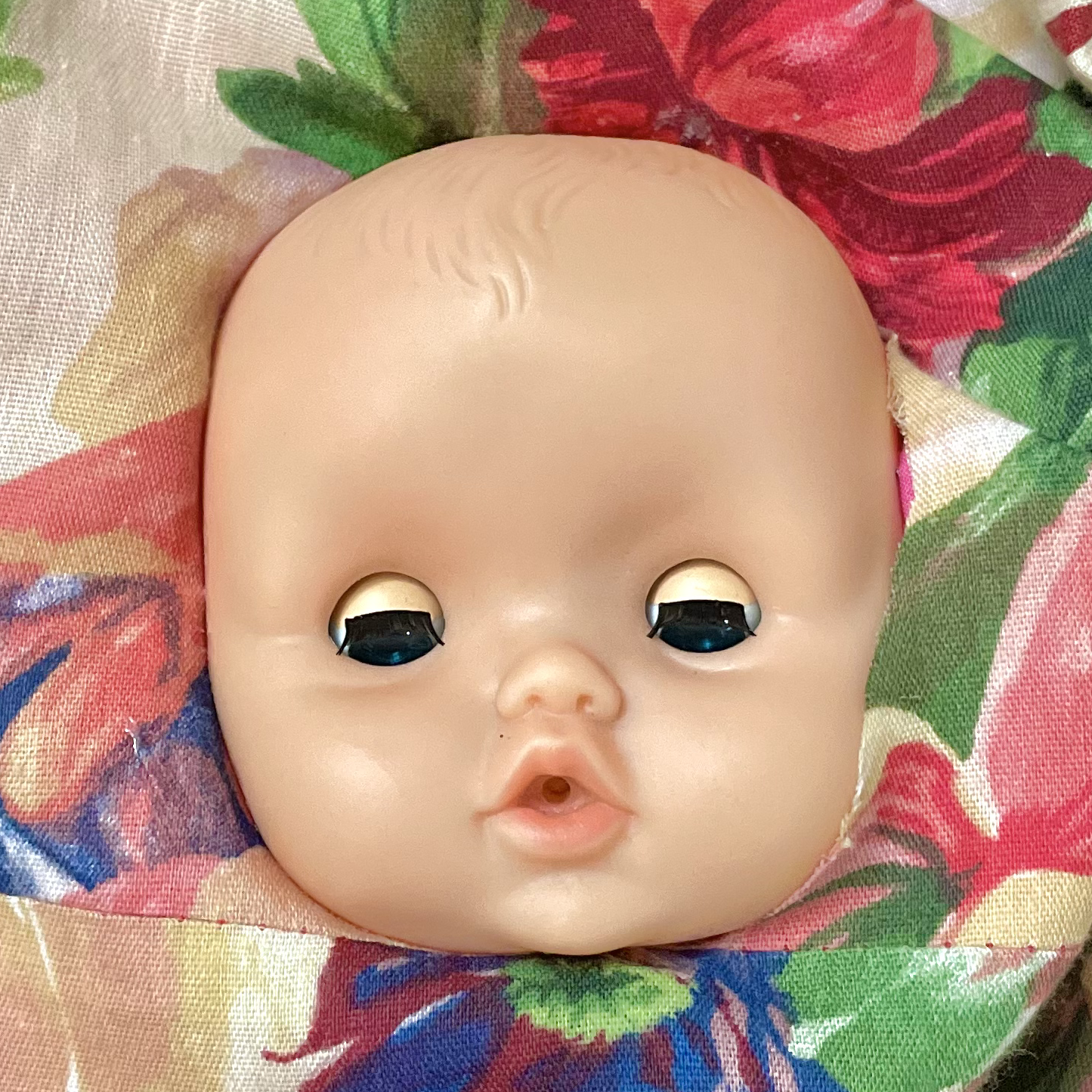

image of god⋆˚𖥔 ݁ ˖, 2026
Doll heads, doll body, cotton, lace, chiffon, silk satin, polyester, video
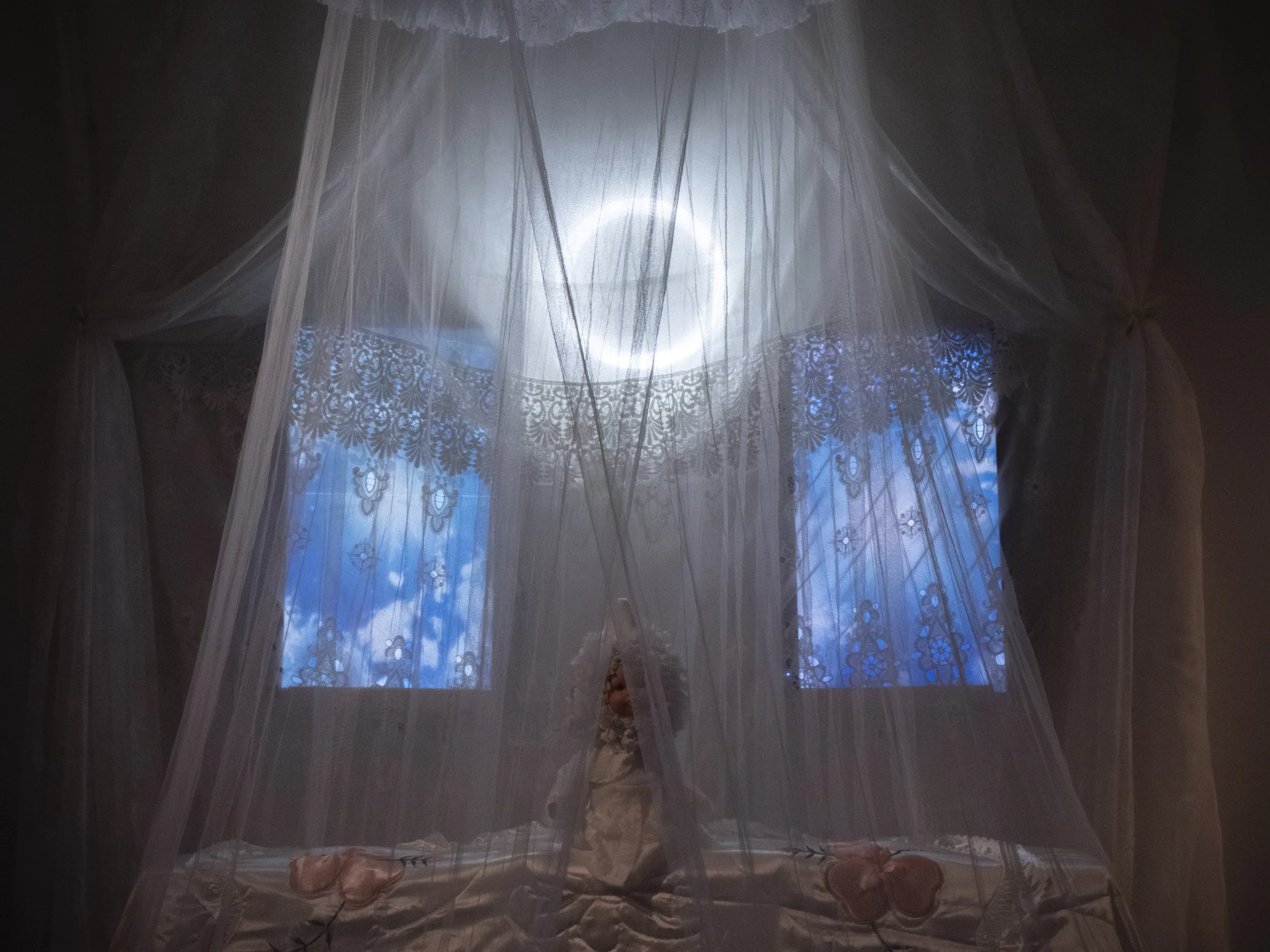
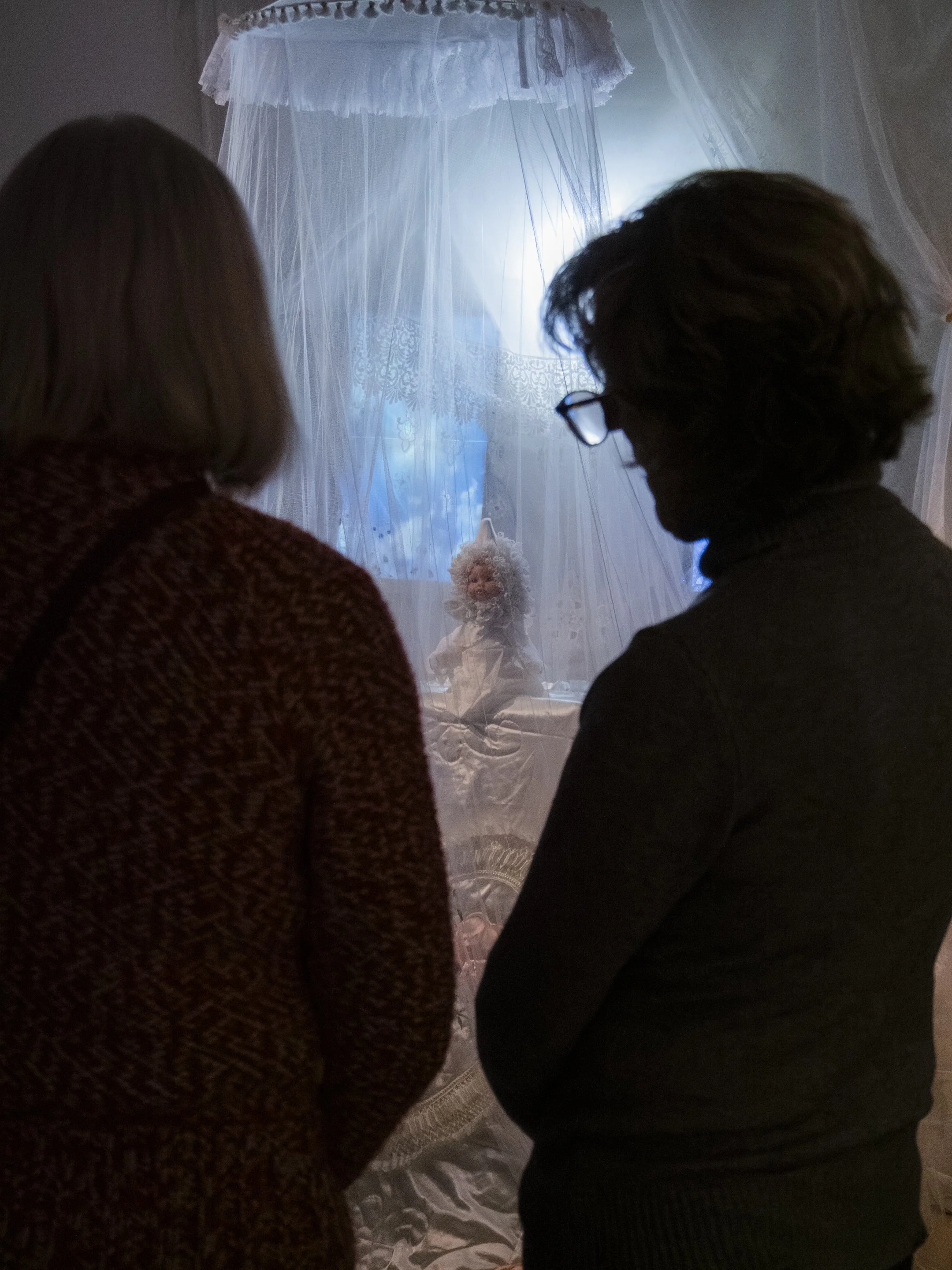
Photographed by Ivan Ceria for The Biyuti Project
This project was generously funded by the Ontario Arts Council.


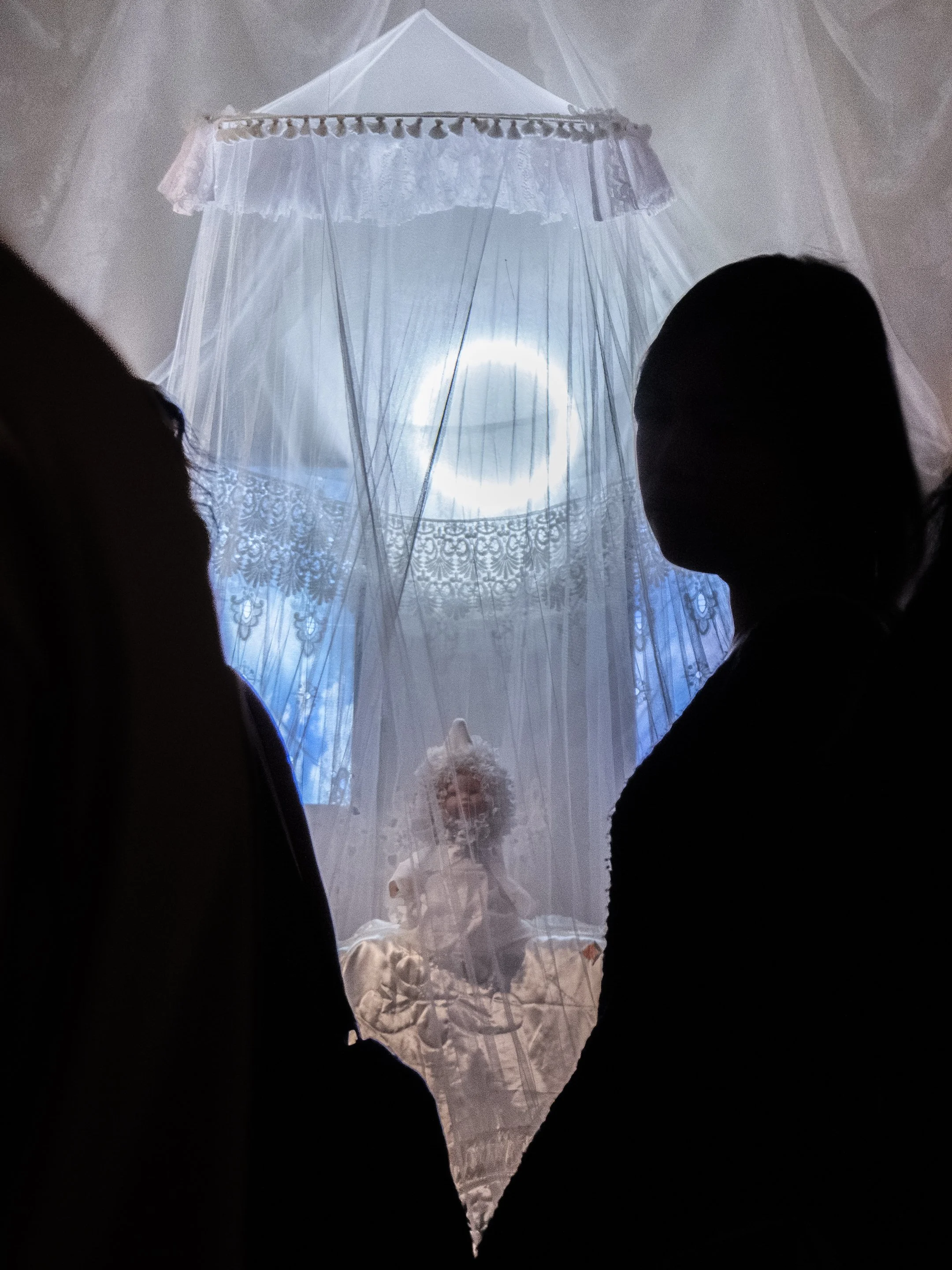
Imaging the divine is a paradoxical dilemma, as by design, divinity is supposed to be unknowable, undefinable, and beyond human capability. Recalling the descriptions of angels in Ezekiel, Isaiah, and the Book of Revelation, for example, conjure fearsome and monstrous chimeras, contiguously nonhuman. It is no surprise then, that images of God, especially in Medieval imaginations, took on tricephalous (or three-faced) forms as a way to reconcile the trinitarian aspects of God the Father, Jesus the Son, and the Holy Spirit, as one Being. Transcending the human body, God became a sort of trans-human, now precariously dancing with the monstrous. With these depictions proliferating, so too did their disavowal; the three-faced Trinity had become impermissible due to its parallels to contemporary depictions of a polycephalous Devil. For image of god, this convergence of the sacred, the profane, the transhuman body, the monstrous, and permissibility became its primum mobile, an allegory for the rejected trans body, queered and bemonstered for its sin of being its father’s child.